Small vs. Large Bubble Wrap: The Ultimate Protective Packaging Decision Matrix
Key Takeaway
Engineering breakdown comparing small (10mm/4mm) vs. large (25mm/12.7mm) bubble wrap for B2B damage reduction and B2C dimensional shipping cost control.
Every parcel dispatched through modern courier hubs undergoes dynamic vibration, rough conveyor sorting, and high-impact drop decelerations. Selecting the incorrect bubble size forces an immediate operational penalty: excessive transit damage rates on one side, or bloated volumetric DIM weight fees and squandered warehouse cube on the other.
Executive Summary
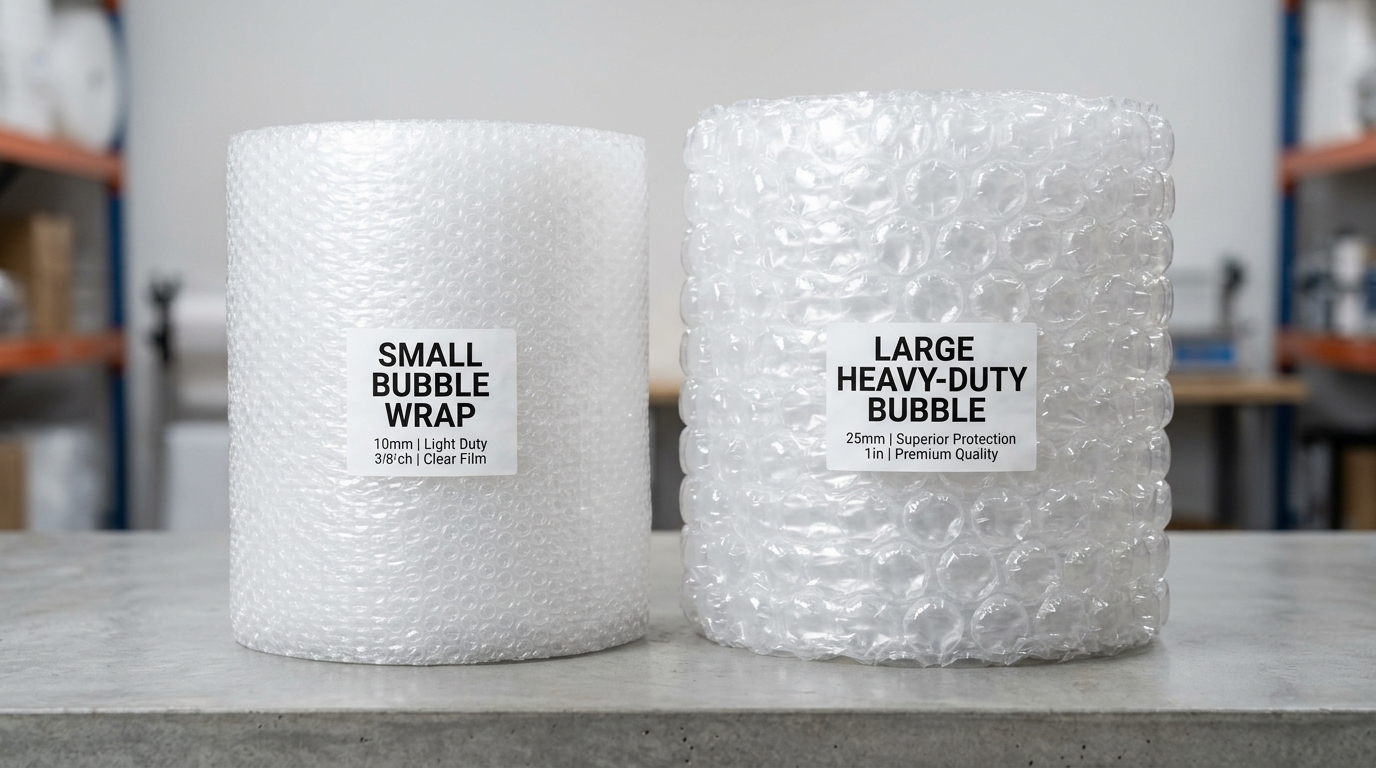
Small Bubble Wrap (10mm / 4mm height) delivers close-fitting surface defense and scratch prevention without increasing box cubic volume. Large Bubble Wrap (25mm / 12.7mm height) provides deep impact deflection for heavy industrial cargo and fills large voids inside corrugated cartons. Matching bubble cell depth to item weight eliminates damaged returns while preserving courier postal margins.
1. Structural Breakdown: Small Bubble Wrap
Small bubble wrap features a low-profile 4mm (1/8") cell height with a tight 10mm diameter barrier-sealed pocket. This tight geometry allows the film to conform precisely around irregular contours without creating dead volumetric air pockets.
It is engineered primarily for surface defense, abrasion resistance, and fine scratch prevention. Small bubble wrap excels at wrapping delicate items with intricate edges, including luxury cosmetics, glassware, polished electronics, and handcrafted jewelry.
2. Structural Breakdown: Large Bubble Wrap
Large bubble wrap utilizes a heavy-duty 12.7mm (1/2") profile with wide 25mm diameter air pockets. The deeper air cushion provides substantial deflection distance, absorbing severe deceleration shocks when heavy parcels are dropped during courier sorting.
This structural depth makes it the premier choice for blocking and bracing heavy, rugged industrial items. It also functions as a rapid, lightweight void filler that prevents heavy items from shifting inside corrugated cartons.
3. Side-by-Side Comparison Matrix
| Metric | Small Bubble Wrap (10mm / 4mm) | Large Bubble Wrap (25mm / 12.7mm) | Operational Verdict |
|---|---|---|---|
| Primary Function | Surface scratch defense & precision contour wrapping | Heavy shock attenuation & high-volume void filling | Small for intimate wrap; Large for impact barriers |
| Ideal Item Weight | Lightweight to medium goods (< 5kg) | Heavy, dense, or rigid components (5kg – 35kg+) | Large prevents bottoming out under heavy loads |
| Impact on Dimensional (DIM) Weight | Minimal; keeps cartons in smaller courier tiers | High; expands outer box dimensions rapidly | Small protects postal margins on lightweight parcels |
| Space Efficiency on the Packing Bench | High; compact 100m rolls save bench space | Moderate; bulky 50m rolls require overhead dispensers | Small yields more linear meters per roll diameter |
4. Warehouse Storage & Cost Efficiency
For High-Volume B2B Fulfillment Centers
Large bubble wrap occupies massive warehouse cubic volume, requiring overhead gravity-fed dispensers or automated carousel gantries above packing benches. Operations managers should specify continuous 1500mm master rolls slit into modular widths (300mm/500mm) to eliminate secondary cutting times. Stacking small bubble rolls on vertical pallet racks preserves valuable floor footprint while ensuring high-velocity pick lines run without frequent roll changeovers.
For Scaling B2C E-Commerce Merchants
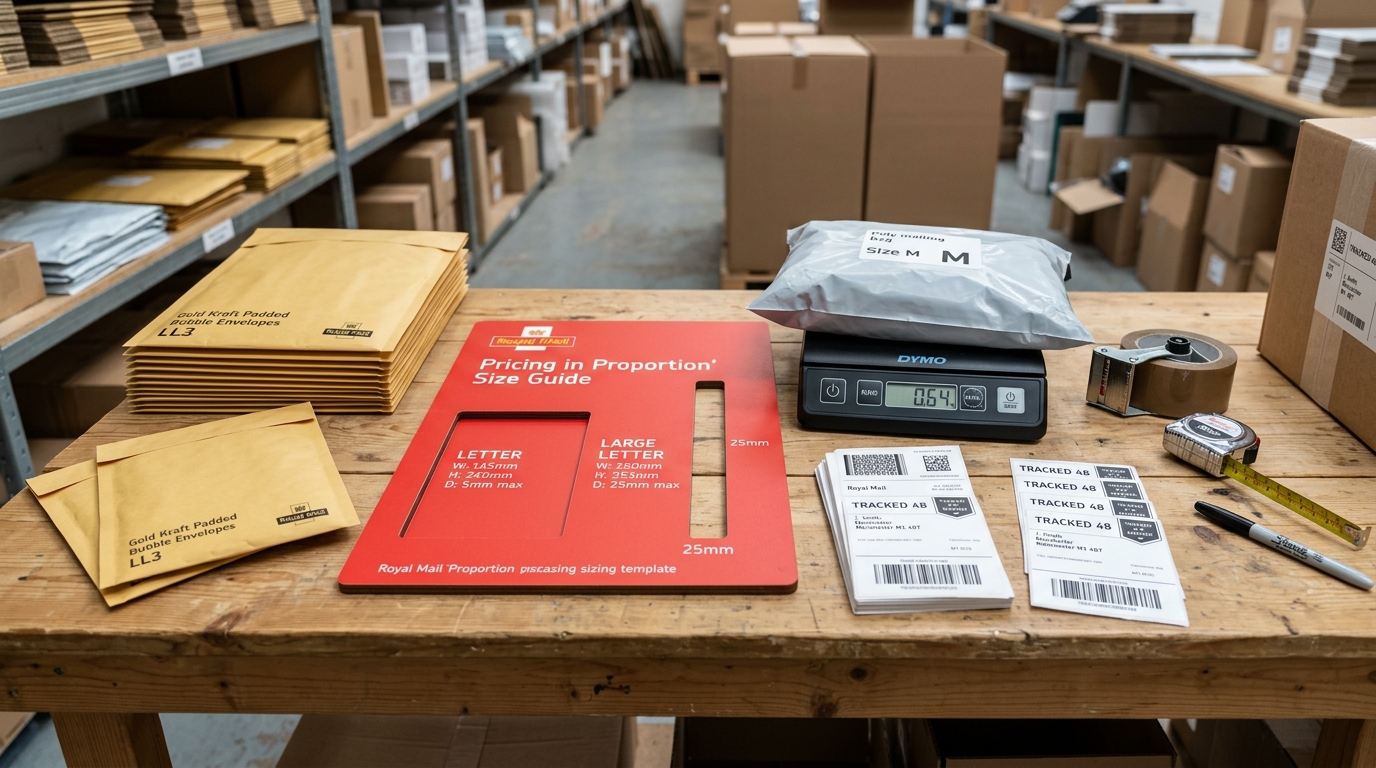
Home-based and boutique shippers face severe physical square-footage constraints under packing tables. Small bubble wrap (100m rolls) delivers double the wrapping yield per roll diameter compared to large bubble alternatives. Pair small bubble wrap with custom-fit single-wall cartons to protect fragile inventory without pushing parcels from Royal Mail Large Letter into expensive Small Parcel pricing tiers.
Ready to order packaging featured in this guide?
Explore full sizing specs, volume discount tiers, and instant pallet pricing in our live catalog matrix.
Related Technical Guides

Warehouse Outer Layer Guide: Corrugated Boxes vs. Grey Mailing Bags vs. Jiffy Padded Bags
Structural Engineering of Corrugated Boxes: Single vs. Double-Wall Compression & Pallet Stacking
Clothing & Apparel Shipping Guide: Why Grey Mailing Bags & Plain Grip Seal Bags Are the Industry Standard